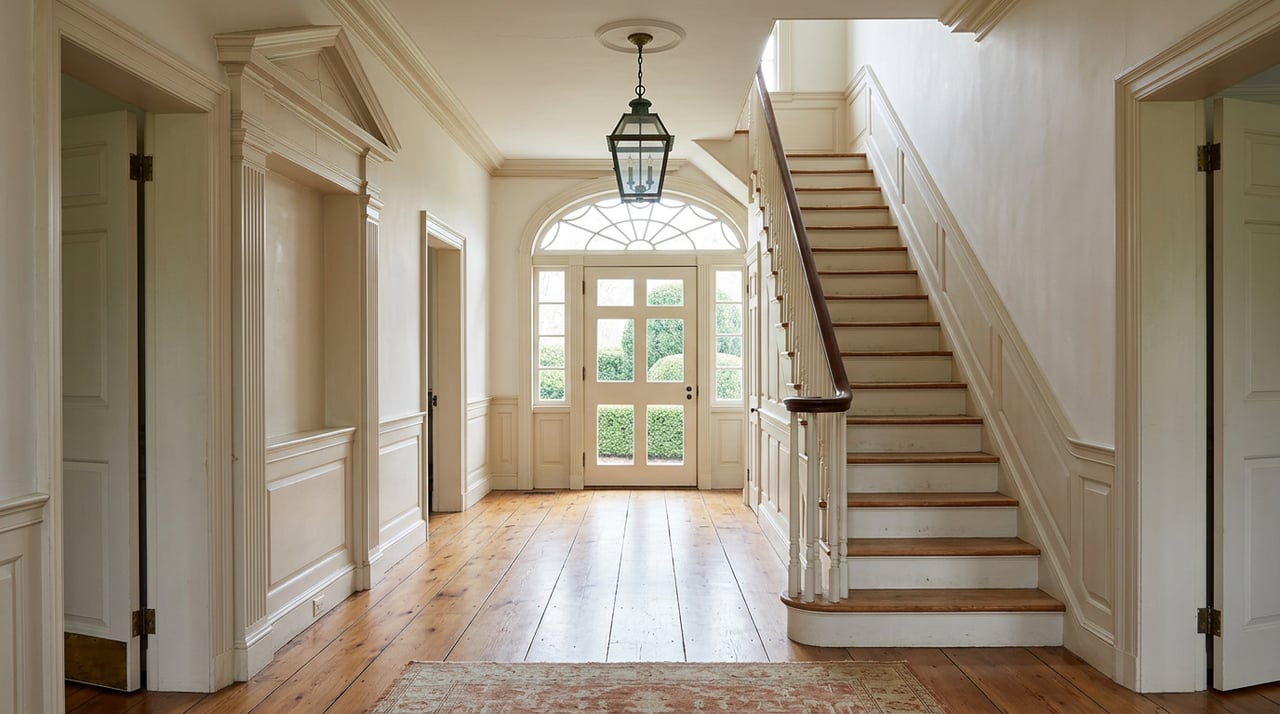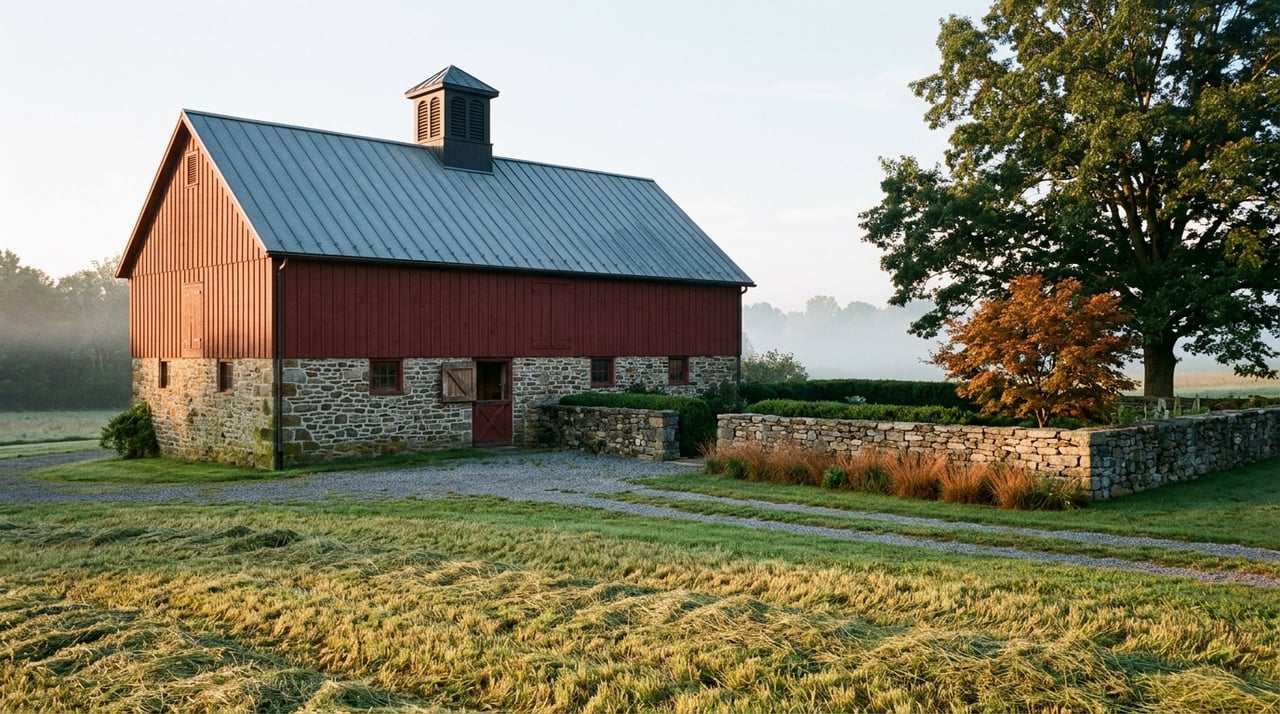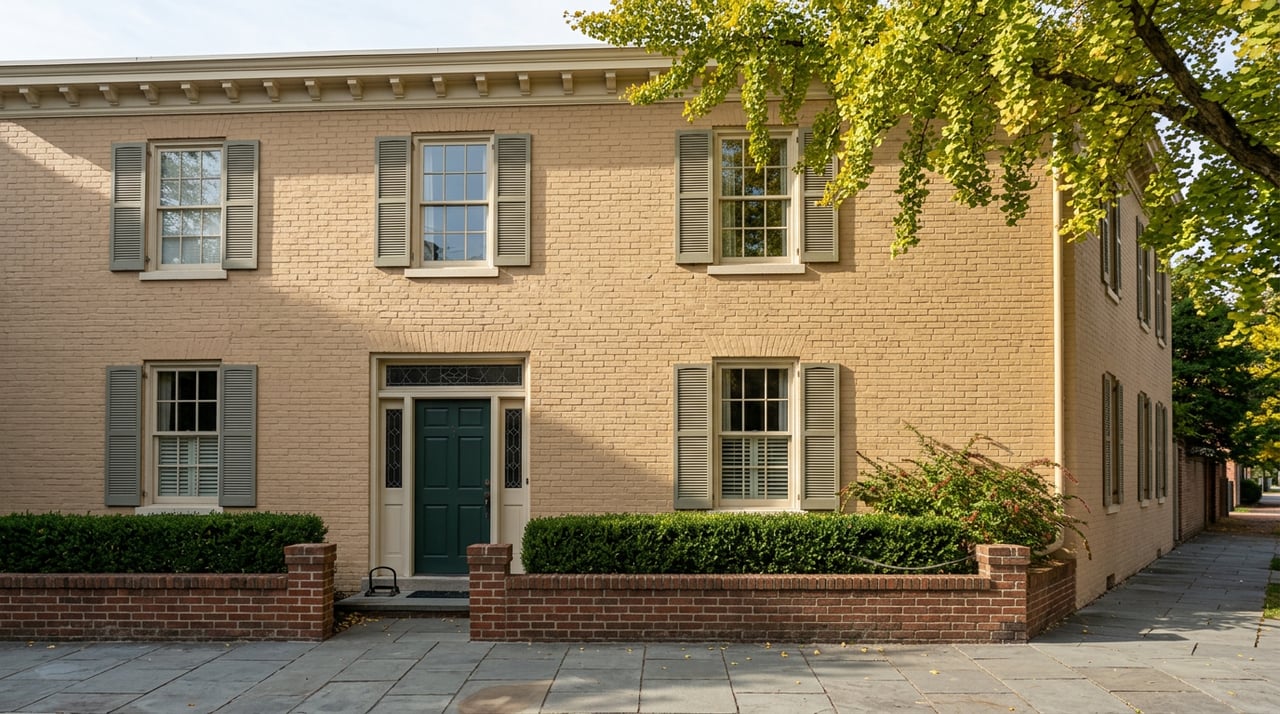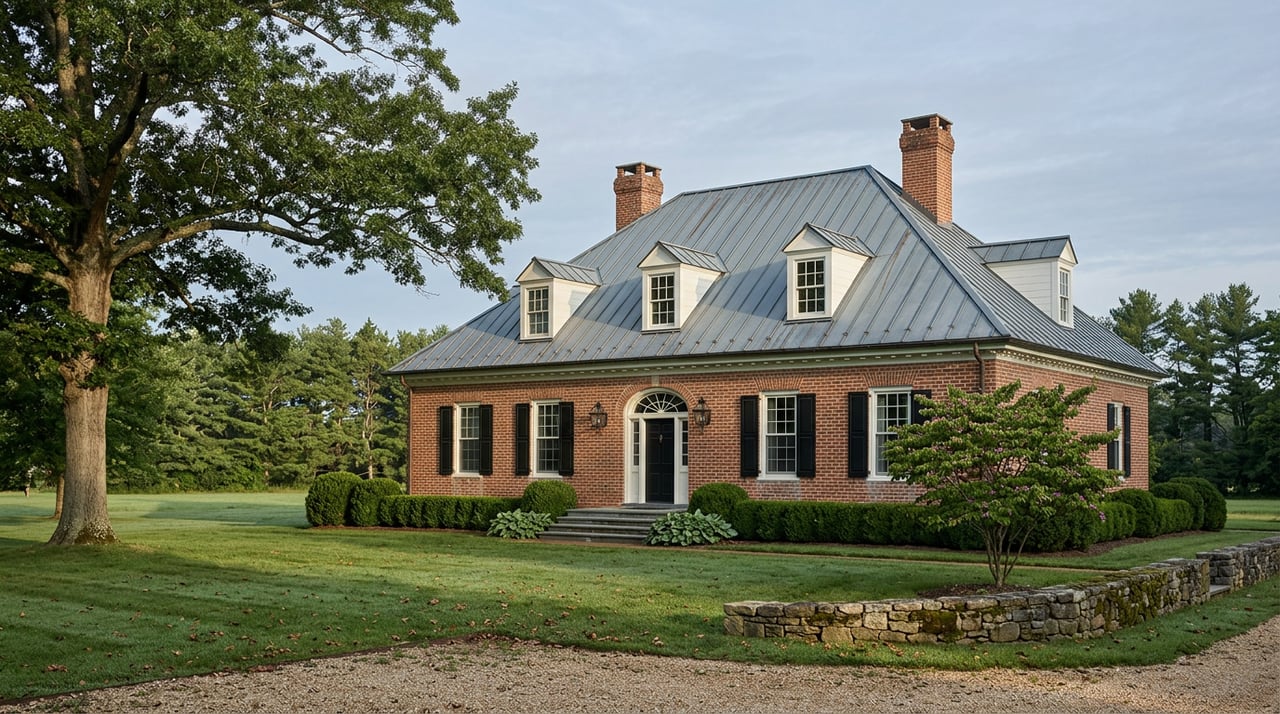
A seller in Old Town Warrenton calls a fencing contractor to replace a sagging split-rail before putting the house on the market. The contractor asks if the property is in the historic district. The seller says no, the house is a plain 1950s brick rambler, nothing like the grand Federal and Victorian homes on Culpeper Street. The contractor is right to ask. The seller is wrong, and finding that out after signing a listing agreement is the expensive way to learn it.
Warrenton's Historic District has spent the last few years quietly getting bigger and older at the same time, and neither change shows up on the property's tax card.
The Reach Quietly Got Bigger
When the Town of Warrenton created its local Historic District in 1982, most people pictured what still anchors the postcard version of downtown: the 1890 Classical Revival courthouse, the churches, the brick storefronts, the homes that once belonged to a Virginia governor and a Confederate general. The district was first listed on the National Register and the Virginia Landmarks Register in 1983, and for decades its story stopped there.
That changed with a 2019 resurvey. Historians working with the town found enough architecturally significant construction from the mid-twentieth century that they extended the district's period of significance from the early 1930s all the way to 1970, and that update was formalized with additional documentation approved in 2024. The same 2024 update also expanded the district's physical boundary, pulling in properties at the outer edges of the historic core, including two individually listed homes, Monterosa and Yorkshire House.
Put plainly, a house built the year Eisenhower took office can now carry the same regulatory status as one that watched Union and Confederate troops move through town. The boundary a seller assumes applies only to the oldest blocks around Culpeper and Falmouth streets has moved, and the age cutoff a seller assumes protects a mid-century property no longer does.
What "Contributing Resource" Means for the House You're About to List
The Architectural Review Board, the five-member citizen body that administers the district, does not evaluate a property by asking whether it looks historic. It asks whether the house falls inside the boundary and inside the period of significance, and whether it retains enough of its original design, materials, and setting to read as part of the district's story.
A case that moved through the ARB illustrates exactly how far that reach extends. A house at 206 Culpeper Street, built in 1953 as a Colonial Revival residence, came before the board for a modification to a previously approved addition. The staff review didn't hedge: the house does not qualify for individual listing on its own, but it is a contributing resource to the Warrenton Historic District under Criterion C for architecture, meaning its form, materials, and integrity tie it to the district's character even though nothing about it screams landmark. The board's conditions for that project were specific and unglamorous: siding that complements but doesn't imitate the original, new brickwork whitewashed to match the existing finish, and any new fence or wall held to six feet or the zoning maximum, whichever is lower.
That is the pattern. The district doesn't distinguish between a house a National Register nomination writer would call significant and a house that simply happens to sit inside the lines and inside the decades now covered. Both need the same document before exterior work can start: a Certificate of Appropriateness.
The Monthly Clock Sellers Don't Budget For
The Certificate of Appropriateness process runs on a fixed monthly calendar, and that calendar is where pre-listing timelines quietly slip.
| Step | Timing |
|---|---|
| Application deadline | 4:30 PM on the 1st of the month, or the next business day |
| ARB meeting | 4th Thursday of the month, 7:00 PM, Town Hall, 21 Main Street |
| If deferred for more information | Roll to the following month's meeting |
| Formal notification | Mailed after the vote |
A seller who discovers in early September that a roof, fence, or addition needs board approval is not looking at a quick permit pickup. They are looking at roughly a three-week wait for the next meeting at best, and a full additional month if the board asks for revised drawings or product samples, which the record shows happens routinely. A December 2025 ARB meeting spent real time on a projecting sign application at 47 South Third Street, working through bracket placement and mortar-joint attachment details before staff would recommend approval. That is the level of scrutiny a seller's contractor should expect to navigate, not skip.
The Work That Actually Triggers a Certificate
Sellers tend to assume the district only cares about additions and demolition. The list of triggers is broader and touches ordinary pre-listing curb appeal work:
- Roofing, including the specific metal roof criteria the town added to its guidelines in 2014 after determining that some pre-finished, pre-painted products could meet the district's standards
- Fences and walls, capped at six feet or the applicable zoning limit
- Signage, which requires a Certificate of Appropriateness for any sign within the district regardless of size
- Additions, breezeways, and retaining walls, all reviewed for how their materials and scale read against the original house
- In-kind replacement of historic fixtures, which the board has treated narrowly, limiting some approvals to matching what already exists rather than allowing upgrades
None of this requires a project to be dramatic. A seller repainting trim, swapping a chain-link fence for something more presentable, or putting up a for-sale sign with an unusual bracket can land in front of the same five-person board that reviews additions to Federal-era townhouses.
Disclosure Doesn't Rescue the Timeline
Virginia's Residential Property Disclosure Act requires sellers to tell buyers, in writing, that the property may sit inside a historic district, but the language is deliberately hands-off. The statute has sellers state that they make no representations about how the district ordinance affects the property and instructs buyers to do their own homework, reviewing the local ordinance, the official district map, and any town materials explaining what approvals a review board might require before work can begin.
That clause protects the seller from misrepresentation, not from the calendar. Disclosing that a house sits in the district doesn't shorten the ARB's monthly cycle, and it doesn't retroactively cover work a seller completed without a certificate. Buyers who do their due diligence, which the statute explicitly tells them to perform, can and do ask whether recent exterior changes were properly permitted through the board.
Worth flagging for anyone listing later this year: Virginia's disclosure statement itself was revised as recently as July 2026, and the underlying code section is scheduled to change again effective January 1, 2027, following action in this year's General Assembly session. Sellers and their agents should confirm they are using the current form at the time a contract is signed rather than one downloaded months earlier.
What This Means If You're Listing This Fall
The practical fix is sequencing, not avoidance. Before signing a listing agreement, confirm two things: whether the address falls inside the district's current boundary, which now extends further than many owners assume after the 2024 expansion, and whether any exterior project on the pre-listing punch list, roof, fence, paint, signage, would need a Certificate of Appropriateness. If either answer is yes, submit the application before the month you'd planned to go live, not during it. A deferred certificate can cost a seller an entire selling season if it lands in the wrong week of the calendar.
FAQ
Does the historic district only apply to the oldest, most obviously historic homes downtown? No. The period of significance now runs through 1970, and the boundary was expanded in 2024. A mid-century house with no obvious period detailing can still be a contributing resource subject to the same review process as a nineteenth-century landmark.
Do I need a Certificate of Appropriateness just to sell my house? No. The certificate is required for exterior alterations, not for the sale itself. Selling a house inside the district requires disclosure under Virginia's Residential Property Disclosure Act, but listing and closing don't themselves require ARB approval unless you're also changing the exterior.
How much time should I budget if my pre-listing work needs board review? Plan for at least one full monthly cycle between application and meeting, and build in a second month as a buffer in case the board requests additional materials, which the record shows is common for anything beyond a straightforward sign or roof replacement.
Selling a house in one of Warrenton's older neighborhoods means selling inside a set of rules that changed more recently than most owners realize. If you're weighing a listing timeline against a fall market and want to know exactly where your property sits relative to the district's current boundary, Allen Real Estate has spent more than three decades working these specific streets and can help you sequence the paperwork before it costs you a season. Contact us.