What happens when a septic system passes every test Virginia now requires, and the closing still stalls because the county's own soil rules and a decades-old conservation easement never talked to each other?
That is the situation quietly working its way through more Upperville transactions than most buyers expect. Since July 1, 2025, Virginia has had a new statute governing how septic inspections are performed during real estate sales. Agents on both sides of the table have spent the past year learning its mechanics, and for good reason. But in a market built on large, eased, historically farmed parcels, the law itself is rarely the thing that pushes a closing date. The thing that pushes it is older, quieter, and lives in the property's own recorded easement.
What the New Law Actually Requires, and What It Doesn't
House Bill 2671, signed by Governor Youngkin on March 20, 2025, set minimum standards for septic inspections in Virginia real estate transactions for the first time. The statute, now codified at Section 59.1-310.9 of the Code of Virginia, says that only someone holding a valid onsite sewage system operator, installer, or soil evaluator license may perform the inspection, that the inspector must give the client a signed written contract before starting, and that the written report is due within ten business days of the visit.
Here is the detail worth sitting with: the law does not require every sale to include a septic inspection. Virginia REALTORS has confirmed this directly in its own legislative guidance on the statute. What HB 2671 does is standardize the inspection when a lender, agent, or buyer asks for one, so the exam can no longer be a quick walk over the yard. A complete inspection now means opening or locating the tank, checking baffles and the distribution box, and pumping the tank if the scope allows it. The standard Virginia REALTORS purchase contract still treats the inspection as something buyers request through a separate addendum, Form 600M, which also leaves the question of who pays open to negotiation.
Cost has settled into a predictable band. In Loudoun and Fauquier counties, where system complexity and demand for licensed inspectors both run higher, a standard inspection typically lands between four hundred and five hundred fifty dollars. That is the visible cost. The invisible cost, the one that actually eats calendar days, is what happens after the inspector's report identifies a reserve drainfield site that the property's conservation easement was never written to accommodate.
Why Fauquier's Clay Changes the Math
Most of the Virginia Piedmont, including the ground under Upperville, carries heavy clay soil that drains slowly compared to the sandy soils of the coastal plain. Virginia's own sewage handling regulation, 12VAC5-610-710, addresses this directly. When a percolation test shows a rate slower than forty-five minutes per inch, the state requires a separate reserve absorption area equal to fifty percent of the primary drainfield's size. That reserve site has to be identified, tested, and set aside before a construction permit is issued, whether or not it is ever used.
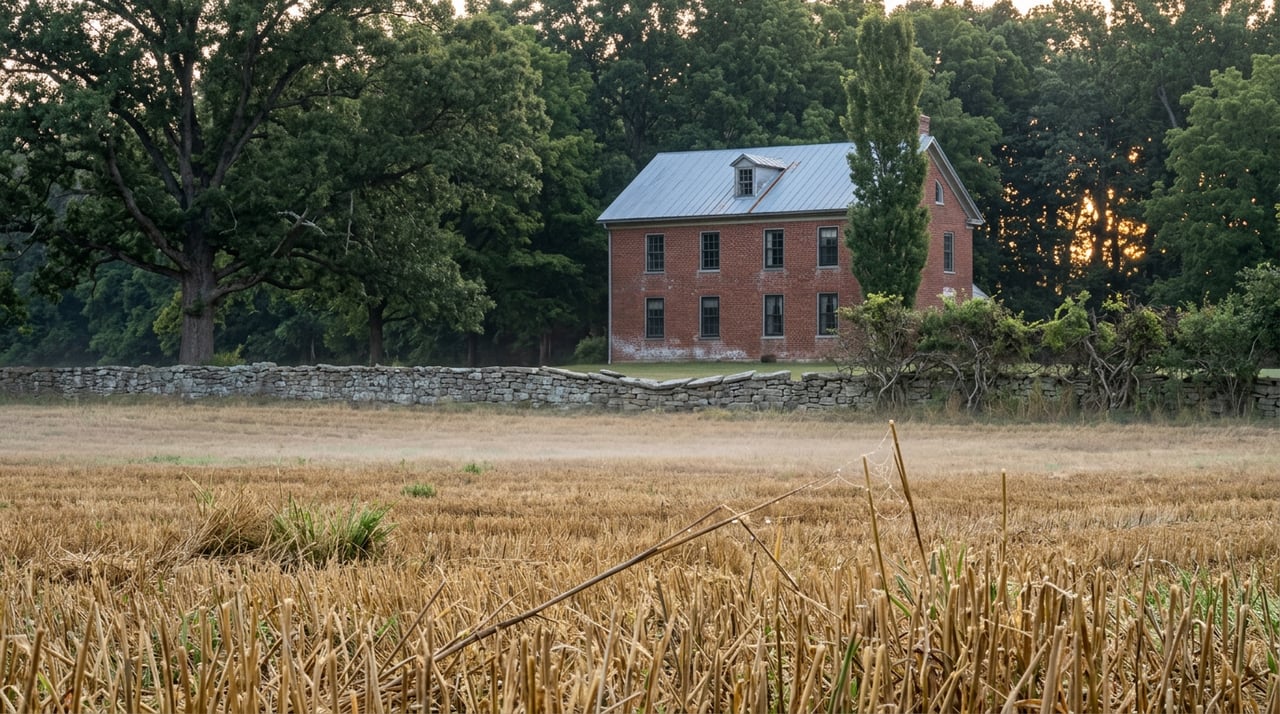
On an ordinary suburban lot, finding room for a reserve site is a formality. On a fifty, one hundred, or three hundred acre Upperville parcel carrying a recorded conservation easement, it is not. The reserve area has to sit somewhere the easement actually permits ground disturbance and new infrastructure, and that is where the paperwork starts working against itself.
The Easement Was Drawn Before the Reserve Rule Mattered
Conservation easements in Virginia commonly define a building envelope or no-build zone, the specific area on the property where new structures, roads, and utilities are allowed. The Virginia Department of Conservation and Recreation lists this as one of the standard elements of a conservation easement, along with restrictions on utility placement and caps on impervious surface that are often set at around one percent of the property's total acreage.
Those envelopes were typically drawn to protect a view, a ridgeline, or a working field, not to anticipate a fifty percent drainfield reserve requirement triggered by a slow percolation test decades later. A property can have a perfectly compliant primary system and a soil evaluator-approved reserve site, and still run into a conversation with the easement holder about whether that reserve site falls inside the area the easement actually allows for future construction.
This is not a hypothetical. A recent Upperville land listing for a property protected by a Land Trust of Virginia easement on Atoka Road specifically notes that the easement still allows for a residential compound and full equestrian facilities, which tells you two things at once. First, well-negotiated easements on this kind of land often do preserve generous building room. Second, the fact that a listing has to spell that out at all is the tell. Buyers and sellers are checking this, because it is not automatic.
What This Looks Like in an Actual Transaction
The properties currently listed around Upperville show exactly why this matters. A stucco and stacked stone cottage on Welbourne Road is marketed with a new septic field already installed. A nearly ten acre estate called Slate Hill sits on land where any future addition would need its own soil work. A twenty-seven acre horse property built around two linked historic stone structures carries the kind of footprint where a reserve site and a building envelope have to be checked against each other before anyone writes an offer.
The sequence that actually protects a closing date looks like this in practice:
- A licensed soil evaluator runs a percolation test and identifies both the primary and reserve absorption sites.
- The reserve site is compared against the recorded easement plat to confirm it falls inside the building envelope or any area the easement allows for future disposal systems.
- If a licensed inspector is engaged under HB 2671, the inspection contract is signed before work begins, and the ten business day report window is built into the contract's contingency deadline rather than assumed.
- The seller pulls the well's operating permit and schedules a water potability test for coliform bacteria, since Virginia's standard contract requires a certificate dated within thirty days of settlement.
- Any conflict between the reserve site and the easement's building envelope goes to the easement holder for a written determination well before the inspection contingency period closes.
Skip step two and the first four steps can go perfectly and the closing still slips, because nobody checked whether the compliant reserve site sits where the easement says it can.
The Fauquier Rules Nobody Reads Until They're Buying
Fauquier County layers its own requirements on top of the state code. Class IIIB wells need at least fifty feet of casing and grout and fifty feet of separation from any source of contamination, including the house itself. The county's code requires septic tanks to be pumped at least every five years, requires a manhole for surface access over the tank's inlet side, and requires that trees with branches or roots reaching within ten feet of the drainfield be removed. None of this is dramatic on its own. All of it becomes relevant the moment a buyer is trying to understand why an inspector flagged a mature oak standing where the drainfield needs clearance.
Before You Write an Offer on an Eased Country Property
- Ask for the recorded easement and the building envelope survey before the inspection period starts, not after
- Confirm whether the property's soil has ever been percolation tested and whether a reserve site is already identified
- Build the ten business day inspection report window into your contract's contingency deadline, not around it
- Request the well's operating permit and schedule a coliform test early, since the certificate has a thirty day shelf life before settlement
- If the reserve site and the easement's allowed area do not obviously line up, get the easement holder's determination in writing before removing contingencies
FAQ
Does every home sale in Upperville now require a septic inspection? No. HB 2671 sets standards for how an inspection must be conducted when one is requested by a buyer, lender, or agent. It does not itself mandate an inspection for every transaction.
Who pays for the septic inspection? Virginia's standard septic addendum, Form 600M, leaves this open to negotiation between buyer and seller rather than assigning it by default.
Can a conservation easement block a septic reserve site outright? Not automatically, but it can require the reserve site to sit inside a defined building envelope or require the easement holder's approval before any new disposal system is sited outside that area.
If you are weighing a purchase or a sale on eased Upperville acreage, the paperwork question is worth answering before the offer, not during the contingency period. Allen Real Estate has spent more than three decades working through exactly this kind of country property transaction across Fauquier and the surrounding counties, and we are glad to walk through what your specific parcel's easement and soil history mean for your timeline.